Revolutionize Signal Analysis with Next-Gen DSOs
Digital storage oscilloscopes (DSOs) are a marked improvement over traditional analog oscilloscope
Revolutionize Signal Analysis with Next-Gen DSOs
Digital storage oscilloscopes (DSOs) are a marked improvement over traditional analog oscilloscope

However, conventional DSOs need help to capture and analyze fast, complex signals in modern electronic systems due to bandwidth constraints, limited sample rates, and shallow memory.
Next-generation DSOs have overcome these challenges with state-of-the-art technology and exceptional capabilities. These instruments revolutionize signal analysis, effectively addressing the limitations of older models and fostering innovation across various industries.
While conventional DSOs have been essential for signal analysis, they face several limitations as technology advances:
To meet modern electronic demands and overcome the limitations of traditional DSOs, next-gen DSOs are essential. These advanced instruments address previous shortcomings with the following features:

Figure 1: Next-Gen Digital Storage Oscilloscope from Keysight, Infiniium EXR Series, 8 Channel, 6 GHz, 16 GSPS, 100 Mpts, 71.7 ps (Source)
Next-Generation oscilloscopes have evolved to offer unprecedented capabilities, from enhanced bandwidth and advanced sampling rates to multi-domain analysis and intuitive user interfaces. Unique features and advantages include:
Higher Bandwidth: Oscilloscope bandwidth is vital for accurate signal measurements, as it defines the highest frequency the device can reliably record. This is measured at the -3 dB point, where the signal drops to 70.7% of its original value. Insufficient bandwidth distorts waveforms and loses high-frequency details. The "5 Times Rule" ensures less than ±2% error by requiring the oscilloscope’s bandwidth to be at least five times the signal frequency.
Recent advancements have pushed bandwidth beyond 8 GHz. This is achieved through meticulous design and specialized technology such as Silicon-Germanium (Si-Ge) circuits, which maintain a flat frequency response and reduce out-of-band noise. Advanced digital filtering and high-speed DRAM enhance bandwidth, improving timing and jitter precision for reliable signal analysis. Bandwidth limit circuits reduce noise for cleaner displays but may cut high-frequency content. Some oscilloscopes use DSP filters to enhance bandwidth, flatten frequency response, improve phase linearity, and decrease rise time, ensuring unmatched signal fidelity and measurement accuracy.

Figure 2: The response is very flat in the pass band and rolls off quickly above 8 GHz to preserve a low noise floor. (Source)
Advanced Sampling Rates: Modern advanced DSOs have significantly improved their sampling rates, leading to higher accuracy in signal capture. These devices use Digital Real-Time (DRT) Sampling Technology to capture waveforms in a single acquisition, preserving total bandwidth and intricate signal details. This is a significant improvement over Equivalent-time (ET) Sampling, which often misses critical transient events.
With sampling rates up to 10 GS/s on all channels, modern oscilloscopes effectively reduce aliasing and improve fidelity for non-repetitive and single-shot signals. High-speed DRAM enables rapid data processing, while advanced digital filtering minimizes noise and distortion. These improvements allow engineers to precisely capture fast, dynamic signal changes, ensuring accurate timing, jitter measurements, and reliable signal analysis in today's fast-evolving electronic systems.

Figure 3: The advanced oscilloscope sequentially captures, digitizes, and stores discrete amplitude values of the input signal at regular intervals (Source)
Enhanced Resolution and Precision: DSOs capture signals in real-time using high-sample-rate ADCs but cannot initially display varying trace intensities. Modern Digital Phosphor Oscilloscopes (DPOs) improve upon DSOs by reintroducing trace intensity to represent the signal frequency of occurrence.
Advanced DSOs, such as MulticomPro’s Dual Channel and Quad Channel Digital Ultra Phosphor Storage Oscilloscopes, use this technology to deliver high-quality trace-intensity modulation. They feature fast update rates and deep memory, enabling superior waveform rendering. DPOs, with their ultra phosphor technology, significantly boost signal clarity and make waveform details more visible. This makes detecting subtle variations and noise that standard DSOs often miss easier, providing a superior visual representation of waveforms.
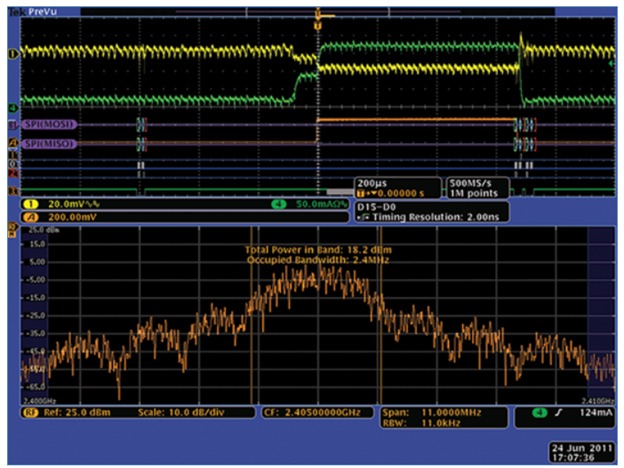
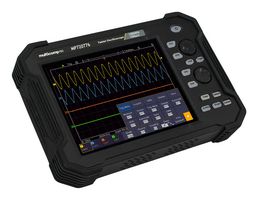
Figure 4: MULTICOMP PRO MP720115 Ultra Digital Phosphor Oscilloscope (Source)
These advanced trigger types and controls enable precise event isolation, enhancing the oscilloscope's utility in complex signal analysis.
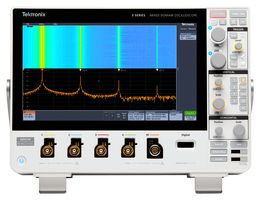
Multi-Domain Analysis: Modern oscilloscopes, like Mixed Domain Oscilloscope (MDO), support multi-domain analysis, allowing engineers to work across time, frequency, and protocol domains. An MDO integrates an RF spectrum analyzer with an MSO or a DPO, enabling smooth analysis across digital, analog, and RF signals. This capability allows engineers to view time-correlated displays of protocol, state logic, analog, and RF signals within embedded designs, significantly reducing measurement uncertainty and speeding up troubleshooting.
MDOs are essential tools for debugging complex systems involving diverse signal types. Unlike traditional DSOs, they offer comprehensive domain analysis, real-time monitoring, advanced triggering options, and enhanced display capabilities, making them indispensable for tackling modern engineering challenges.
Key benefits of MDOs are:
In Figure 5, the display showcases a time-correlated view that includes all relevant domains, including protocol (digital), analog, and RF.

Figure 5: In one display, we can have a time-correlated view of all the radio domains: protocol (digital), analog, and RF. (Source)

Figure 6: I2C address and data bus waveform decoding (Source)
Figure 7: Extensive connectivity with interfaces like Centronics, Ethernet, RS-232, GPIB, VGA, and front-panel USB ports. (Source)
Touchscreen and User Interface: Touchscreen interfaces on modern oscilloscopes enhance user interaction. Large, capacitive touch screens support multi-touch gestures and user-friendly UI designs, significantly improving operational efficiency. These interfaces make navigating menus, adjusting settings, and interacting with waveforms easy. They also support mouse control and remote web control over LAN. The advanced interface technology ensures that all critical controls are just a touch away, allowing users to position, zoom, and interact with waveforms and measurements effortlessly. For example, Keysight’s InfiniiVision 3000T X-series oscilloscope features a user-friendly touch interface and capacitive touch screen, making operation as straightforward as a tablet. It offers three access methods: touch GUI, traditional buttons and knobs, and a Windows-like menu. Additional features include a “touch off” button and USB mouse/keyboard support.
Documentation is simplified with quick annotations, a soft keyboard, a sidebar for extra information, and touch gestures for easy navigation. Built-in USB ports enable seamless PC connectivity, while BenchVue software allows for remote control and automated test sequences, making it easy to export data to Excel, Word, and MATLAB.
DSOs are essential tools for signal analysis in various fields. However, traditional models often need to be more robust to limitations such as restricted bandwidth and sampling rates, inadequate memory depth, and basic triggering capabilities. Modern DSOs address these issues by offering higher bandwidths and sampling rates, improved resolution and precision, and advanced features like multi-domain analysis and automated measurements. These advancements allow for precise and comprehensive signal analysis, making modern DSOs crucial for high-speed digital design, RF and microwave testing, embedded systems debugging, automotive and industrial applications, power analysis, and communication systems. This article explores the unique and advanced features of next-generation DSOs and their transformative impact on signal analysis and engineering efficiency.
As a global distributor, Farnell offers various DSOs to cater to different requirements and ensure high performance across multiple industries.
One of the greatest revolutions in all of human history! AI is an all-encompassing concept that incorporates human intelligence into machines
The #1 Destination for Embedded Evaluation Boards, Development Kits, and Tools
Explore our well-curated library of whitepapers, technical articles, videos, training modules, tutorials, and more to support you in developing your designs, business, and career