When evaluating your next smartphone, you naturally focus on parameters like CPU type and memory capacity: hardly surprising, considering how they impact your quality of online experience.
Yet the device's performance – or its ability to function at all – depends just as much on its complement of passive components. And this truth extends out from the phone you were considering to the furthest reaches of today's technological ecosystem.
The three primary types of passive components are resistors, capacitors and inductors. They have no power gain and cannot amplify or control current flow. However, they need no external power to operate, while offering a linear response to whatever voltage or current is supplied to them.
This article looks at the choices available to you if you're seeking to design passives into an electronic or electrical circuit. But these choices are constantly changing as applications become more demanding and new developments appear in the marketplace. As in any other industry throughout history, progress is made through ever-repeating steps; from the development of revolutionary new materials or processes, then evolutionary or incremental improvements to existing technologies, and finally, widespread production and normalisation of the new approach.
Accordingly, we review the products currently widely available and their contrasting suitability for various applications – but we also cover more recent evolutionary products to consider, and even some revolutionary developments that indicate what the future could bring.
RESISTORS
Resistors play a crucial role in all electronic circuits for many reasons. They impede the flow of electric current in a circuit, creating a voltage drop. This allows them to regulate current, divide voltage, and set bias points in electronic systems. They come in various resistance values, each colour-coded for easy identification.
Revolution
A review of recent research shows that resistors can play a surprisingly complex role in emerging high-technology applications. Researchers at MIT have created protonic programmable resistors -- the building blocks of analogue deep learning systems -- that can process data a million times faster than the synapses in the human brain. These ultrafast, low-energy resistors could enable analogue deep learning systems that can train new and more powerful neural networks rapidly, which could then be used for novel applications in areas like self-driving cars, fraud detection, and health care.
Evolution
Of the four types of fixed value resistors, Carbon Composition resistors, Film or Cermet resistors, Wire-wound resistors and Semiconductor resistors, thick film products are particularly popular, and the technology has attracted much innovation.
Thick film resistors are particularly popular in both industrial and consumer applications because of their relatively low cost. However, the ever-present need for low power consumption and circuit protection in relevant applications is driving the demand for high-performance thick-film resistors.
Higher current rating, lower TCR: To meet the increasing energy-saving needs of industrial and consumer applications, designers are developing thick-film resistor solutions that offer high power ratings with significantly lower TCR characteristics.
For instance, ROHM recently expanded its LTR series with the LTR100L thick-film shunt resistor that provides industry-leading rated power for high power current detection applications. Leveraging an original approach involving resistor material revision and terminal temperature derating led to a higher-performing thick-film resistor solution. As a result, in addition to favourably competing with existing metal shunt resistors, significant improvements were achieved over conventional thick-film resistors. This allows customers to switch from metal shunt resistors to cheaper thick-film resistors.
Additionally, a lower temperature coefficient of resistance (TCR) enables higher current detection accuracy compared to existing thick-film resistors.
Fig.1 shows the benefits of the device's higher power rating and superior TCR
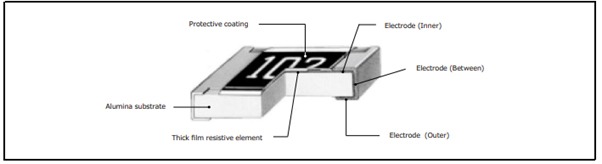
Figure 1: Benefits of the LTR100L's higher power rating and superior TCR
Improved surge characteristics: Panasonic's ERJ-PM8 series anti-surge thick film resistors help reduce the need for high resistance value resistors. They also offer high precision, high voltage, and high resistance with a limited element voltage of 500 V.
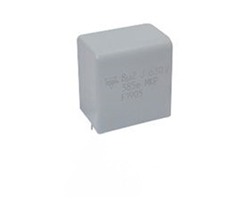
Figure 2: Construction detail for Panasonic ERJ PM8 anti-surge thick film chip resistor
Mainstream choices
The four types of resistor technology currently available are:
- Carbon Composition Resistor: Made of carbon dust or graphite paste, low wattage values
- Film or Cermet Resistor: Made from conductive metal oxide paste, very low wattage values
- Wire-wound Resistor: Metallic bodies for heatsink mounting, very high wattage ratings
- Semiconductor Resistor: High frequency/precision surface mount thin film technology
To explore the full range of resistors, Click here
CAPACITORS
Capacitors are passive components that store electric charge. They comprise two conducting plates separated by an insulating dielectric material. When voltage is applied, electric charge accumulates on the plates, with polarity depending on the voltage polarity. The capacitance value determines how much charge can be stored for a given applied voltage (Capacitor Charge Calculator).
Capacitor functions include:
- Storing and discharging electric charge
- Filtering signals
- Decoupling power supplies
- AC coupling between circuit stages
- Tuning and resonance circuits
- Snubbing transients
Revolution
Miniaturisation and high power density are essential for all components as products extract higher performance and functionality from smaller form factors. One advanced solution, which comprises high-density silicon capacitors, was developed with a semiconductor MOS process. These use the third dimension to substantially increase the capacitor surface and thus its capacitance without increasing the capacitor footprint. This process, which has been perfected by such companies as IPDIA (Murata) in France, offers a glimpse into what might be the next phase in volumetric efficiency of components and begins to augment the ubiquitous MLCC.
Evolution
Nevertheless, as illustrated by the forthcoming examples, the ability to withstand harsh environments is often a crucial requirement, and capacitors are no exception to this demand.
Metallised Polypropylene AC Filtering Film Capacitors: Vishay Roederstein has introduced a new series of metallised polypropylene AC filtering film capacitors optimised for high humidity environments. MKP1847C AC filtering devices withstand demanding temperature humidity bias (THB) testing – 40 degrees C and 93 percent relative humidity for 56 days at rated voltage – without altering their electrical characteristics.
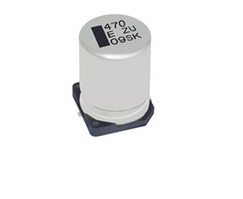
Figure 3: VISHAY MKP1847C510355K2 Power Film Capacitor, Metallized PP, Radial Box - 4 Pin, 1 µF, ± 10%, AC Filter, Through Hole.
These capacitors are designed to ensure stable capacitance and ESR values over a long service life under harsh environmental conditions during operation. Compared to previous-generation devices, the MKP1847C AC filtering series capacitors offer higher humidity robustness at a lower cost while maintaining the same footprint. The devices are targeted at input and output filtering in UPS systems, renewable energy inverter grid interfaces and welding equipment.
High-Temperature Hybrid Aluminium Capacitors: Panasonic's new EEH-ZU Series conductive polymer hybrid aluminium capacitors are said to be capable of operating at high temperatures with conductive polymer capacitor performance and aluminium electrolytic capacitor safety in a surface-mount package.

Figure 4: PANASONIC EHZU1V471P Hybrid Aluminium Electrolytic Capacitor, 470 µF, ± 20%, 35 V, Radial Can - SMD, 0.009 ohm
These new capacitors are rated for a 135 degrees C operating temperature and feature a 4,000-hour endurance rating. These hybrid capacitors are said to be able to withstand a voltage range of 25 to 63 VDC, have 100-560 microfarads and are available in vibration-proof variants upon request. AEC-Q200 qualification ensures quality and reliability. These parts are well-suited where high temperature and high current capability are demanded by the application.
Mainstream devices and choices
Capacitors currently in popular use can be classified into the following five types
- Ceramic Capacitors:
- Multilayer ceramic capacitors (MLCC): Made by stacking alternate ceramic dielectric and metal electrode layers to achieve high capacitance density. Most common SMT capacitor type.
- Ceramic disc capacitors: Leaded capacitors with capacitance from 1 pF to 0.1 μF. They are used for high-frequency coupling and bypassing.
- Ceramic power capacitors: Can handle large currents and voltages up to 10 kV. They are used for power applications and snubbers.
- Electrolytic Capacitors
- Aluminium electrolytic: is the most common type in through-hole and SMT packages.
- Tantalum electrolytic: More stable, reliable, and expensive than aluminum. Used in space-critical applications.
- Niobium electrolytic: Replacement for tantalum with higher capacitance density.
- Conductive polymer aluminum: More stable and reliable than standard aluminum electrolytic.
- Supercapacitors
- Film capacitors
- Mica Capacitors
To explore the full range of capacitors, Click here
INDUCTORS
An inductor, also called a coil, choke, or reactor, is a passive two-terminal electrical component that stores energy in a magnetic field when electric current flows through it. An inductor typically consists of an insulated wire wound into a coil.
Revolution
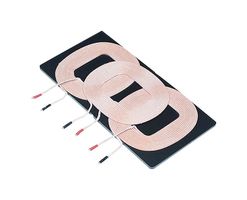
A recent advance in inductor technology now gaining prominence relates to planar inductor design. This is because planar inductors, which can be fabricated using PCB technology, offer excellent performance, high efficiency, and compact size. They utilise low-profile windings with low leakage and AC winding resistance, minimising losses.
These inductors can be designed in various shapes such as circular, rectangular, square, hexagonal, or octagonal. The square-shaped spiral inductors, in particular, have become popular for applications like wearables, communication systems, and electronic gadgets.
Planar technology aims to offset the disadvantages of traditional high-frequency inductors. It allows for low-profile magnetics, making it suitable for modern power electronics operating at higher frequencies.
Evolution
Power inductors for automotive LED headlights: Inductor innovation is also being applied to higher-power applications. TDK's SPM-VT series meets the high thermal and current demands of the automotive LED headlight environment.
The SPM-VT series is the latest addition to TDK's lineup of metal-core, wire-wound power inductors. To meet the tough conditions prevailing in harsh automotive environments, these metal-core power conductors have a wide operating temperature range from -55 °C up to +155 °C.
The units offer low DC resistance along with very small size when compared to ferrite wound type inductors. This is made possible due to the DC superimposition characteristics of metallic magnetic materials.
These inductors boast superior DC superposition characteristics in a compact size. TDK claims that the members of the SPM-VT series feature a rated current that is approximately two to three times higher than that of comparable high-temperature products.
Figure 5: TDK SPM12565VT-1R5M-D Power Inductor (SMD), 1.5 µH, 44.2 A, Shielded, 32.8 A, SPM-VT-D Series (Source)
Mainstream inductor types
Apart from these latest technology examples, many types of inductor are widely available.
- Coupled inductors
- Air Core Inductor
- Laminated Core Inductor
- Ferrite Core Inductor
- Toroidal core inductors
- Bobbin inductors
- Axial inductors
- Multilayer Chip Inductors
- Film Inductor
To explore the full range of inductors, Click Here
The future
The future of passive components lies in their continuous evolution, adaptability, and alignment with technological advancements.
The race towards miniaturisation continues; Innovations like Murata Manufacturing's tiny multilayer ceramic capacitors (MLCCs) measuring just 0.25 x 0.125 mm demonstrate how advanced materials and techniques can shrink passive component sizes while enhancing performance.
Miniaturisation is being helped by integration, as integrated passive devices (IPDs) consolidate various passive components (resistors, capacitors, and inductors) into a single entity. Beyond reducing physical footprint, integration improves performance by minimising parasitic effects and enhancing signal integrity.
Embedded Passive Components are also poised to be an important innovation in electronic design. They offer cost savings and space efficiency. Additionally, placing bypass capacitors closer to the ideal location is a possibility with embedded passives.
Increasing demand in future electronics, electrification, and digitalisation is also fuelling market growth for high-reliability and custom inductors, resistors, and capacitors for applications in demanding contexts.
Farnell - Your no.1 choice for passive components
We are an authorized distributor of worlds top manufacturers such Vishay, AVX, Bourns, KEMET, YAGEO, Murata, Panasonic, KOA, TDK-Epcos, TE Connectivity, TT Electronics, Ohmite & more. With over 230,000 products in stock, we offers an extensive range of passive components including capacitors, EMC/RFI suppression, filters, inductors, potentiometers, trimmers, resistors, all in one place, available for fast delivery in 24-48hrs.









Technologies


Artificial Intelligence
One of the greatest revolutions in all of human history! AI is an all-encompassing concept that incorporates human intelligence into machines
DEVKIT HQ
The #1 Destination for Embedded Evaluation Boards, Development Kits, and Tools
IoT Sensor to Cloud Platform
/IOTCONNECT™ accelerate your loT journey with secure, ready-to-use cloud connectivity
Further Resources
Calculators & Conversion Charts
Selection Guides and Catalogues
Essential Learning Modules
Tech Spotlights
Design Resources
Engineering Glossary
Technical Support
Parts Finder Tools