Then, during the 1920s, industrial automation evolved rapidly as factories began making use of relay logic and underwent electrification – using electrical power to drive their machines .
Software-based automation became a reality in 1964, when Dick Morley invented the programmable logic controller (PLC) for use in the US automotive manufacturing industry . The PLC replaced relay logic, but process changes could be accommodated simply by reprogramming rather than having to rip out and replace wires and relays.
This event significantly facilitated the third industrial revolution, or Industry 3.0, which gathered pace from the Seventies, and, in many factories, is still in operation today. Industry 3.0 saw most production processes become automated, although human intervention was still needed. A typical Industry 3.0 control system would comprise one or more PLCs, plus individual three-term controllers for devices like proportional valves or variable speed drives.
However, the PLCs were limited in their functionality; they could not be programmed to do anything like a general-purpose computer could. Instead, they acted as a programmable, convenient version of the hardwired relay systems they replaced. They spent their time performing Boolean logic tasks like:
“If Tank Heater 1 is ON AND Tank Level 1 is HIGH THEN START Agitator 1”
In fact, even to this day, a true PLC only performs such tasks, although some machines referred to as PLCs are far more powerful and widely functional. A good definition for PLCs is provided by the International Technical Commission’s (IEC’s) Standard IEC 61131 for industrial controllers. The Standard has ten parts covering general information, equipment requirement, user guidelines, communication protocols, safety, fuzzy control programming, and many other aspects regarding programmable controllers.
The third part, IEC61131-3, defines the programming language used for programmable logic controllers. The current edition (Third Edition) was released in 2013 .
This set of standards defines the basic architecture of specific programming languages and allowed programming in five different programming language standards. Of the five languages, three are graphical, and two are textual programming standards. They are listed below:
- Ladder diagram (LD)
- Function block diagram (FBD)
- Structured text (ST)
- Instruction list (IL)
- Sequential function chart (SFC)
Meanwhile, a typical manufacturing process also has monitoring and control requirements beyond the capabilities of a PLC, such as automatic inspection, measurement, verification, and flaw detection. Other examples include industrial imaging, and applications involving high speed data, or machine vision applications to automate quality control systems. These would be handled by a fanless industrial PC with a powerful processor programmed for the specific application, packaged within a ruggedised enclosure suitable for demanding factory environments.
All of this equipment – PLCs, three-term controllers, and industrial PCs – is typically connected back to a central, large-scale supervisory control and data acquisition (SCADA) system located in an environmentally managed control room and tended by human operators.
The SCADA computer and PLCs could be point-to-point wired to the process sensors and actuators, or connected via industrial buses such as Modbus, which uses serial communication lines, Ethernet, or the Internet Protocol Suite as a transport layer. The SCADA computer and its lower-level devices are often collectively described as Operational Technology, or OT, as distinct from traditionally office-based Information Technology (IT) systems.
The SCADA system also communicates upwards, usually through Ethernet, or possibly via Internet, to an enterprise IT system, to report on its operational status, throughput, and other parameters. This helps the IT system users to understand and cater for maintenance requirements and manage production schedules.
These Industry 3.0 systems, although effective in what they do, do not support the benefits available from modern smart technology. They are also bulky, power-hungry and expensive. A SCADA computer usually requires a complete, environmentally-conditioned control room, as mentioned, while PLCs and industrial PCs typically occupy at least a 3U 19” rack, if not 6U or more.
The situation has radically changed with the rise of Industry 4.0, the fourth industrial revolution. Industry 4.0 originated in 2011 from a project in the high-tech strategy of the German government, which promotes the computerisation of manufacturing. Actually, the term “Industry 4.0” was publicly introduced in the same year at the Hannover Fair.
There are four design principles identified as integral to Industry 4.0 :
Interconnection — the ability of machines, devices, sensors, and people to connect and communicate with each other via the Internet of Things, or the Internet of People (IoP).
Information transparency — the transparency afforded by Industry 4.0 technology provides operators with comprehensive information to make decisions.
Technical assistance — the technological facility of systems to assist humans in decision-making and problem-solving, and the ability to help humans with difficult or unsafe tasks.
Decentralised decisions — the ability of cyber physical systems to make decisions on their own and to perform their tasks as autonomously as possible.
Automation and control system manufacturers today can achieve these goals using modern computer, communications and input/output (I/O) hardware because products now available – as we shall see – are incredibly small, power-efficient and economical compared to earlier hardware, while offering high performance and functionality. And because they are small and power-efficient, it becomes easier to package them within industrial-type enclosures such as DIN rail mounting modules.
All of this means that single board computer (SBC) products from manufacturers including Raspberry Pi and Arduino are available for purchase at two levels:
- Plant process control engineers can purchase pre-engineered DIN rail modules configured as a PLC with suitable CPU, communications, process I/O and PLC software. They can then programme, install and commission the PLC on the plant as a smaller, lower-cost alternative to traditional PLCs.
-
Electronics engineers within a control systems OEM manufacturer can purchase board level products from Raspberry Pi, Arduino and other manufacturers to build either general-purpose industrial PCs, or special-purpose solutions for specific applications. One example could be an edge controller mounted directly on the machine being controlled or monitored, gathering data from machine-mounted sensors (or driving machine-mounted actuators) and exchanging data with a gateway via a wired or wireless industrial network.
Another example would be the gateway itself; a device capable of exchanging data with one or more edge controllers, and then communicating with a remote or cloud server accordingly.
Either the edge controller or the gateway could pre-process the plant data, reducing the volume of data to be sent onward. This mitigates network loading and improves security.
Note that an Industrial PC can be configured to operate as a PLC. It could, for example, run OpenPLC – an open-source platform for PLC programming; it is based on user-friendly software that follows the IEC 61131-3 Standard as described above. OpenPLC can transform popular microcontrollers into PLCs. It is the first open source PLC that is fully functional and standardised in both software and hardware. OpenPLC also allows the incorporation of higher-level languages programmed by other software .
We can better understand the possibilities available if we take a closer look at some of the industrial SBC boards available, as well as some DIN mount PLCs based on these.
Industrial SBCs
Raspberry Pi
The Raspberry Pi Compute Model 4 provides the power of a Raspberry Pi 4 in a compact form factor designed for embedded applications.
Raspberry Pi Compute Module 4 incorporates a quad-core ARM Cortex-A72 processor, dual video output, and a wide selection of other interfaces. It’s available in 32 variants, with a range of RAM and eMMC Flash options, and with or without wireless connectivity.
Key features include a high-performance 64-bit quad-core processor, dual-display support at resolutions up to 4K, hardware video decode at up to 4Kp60, up to 8GB of RAM, Gigabit Ethernet, USB 2.0, dual camera interfaces, and PCIe Gen 2 x1 interface. The optional dual-band 2.4/5.0GHz wireless LAN and Bluetooth 5.0 have modular compliance certification.
This allows the board to be designed into end products with significantly reduced compliance testing, improving both cost and time to market. Either the onboard antenna or an external antenna kit can be used.

Figure 1: Raspberry Pi compute module 4
Raspberry Pi facial recognition application: Farnell has put a solution together to help implement face recognition technology with the help of Raspberry Pi. The project hardware detects the faces in an image, identifies key facial features, and retrieves the contours of detected faces .
This solution offers facial recognition in real-time which makes it an ideal solution for indoor security applications. The images must be processed before actual recognition. An example of processing is converting an image to grey. Open CV is used to process an image in this project.
OpenCV (Open source computer vision library) was built to accelerate machine perception use in commercial products and offer a common computer vision applications infrastructure. OpenCV targets real-time computer vision. It finds principal use in image-related operations and assists in the following functions:
- Face detection and its features.
- Detecting shapes like circles and rectangles in an image. For example, finding a picture of a coin in an image.
- Read images and write images.
- Recognising text in images, like reading number plates.
OpenCV use brings a few advantages
- Easy to learn since a large number of tutorials are readily available.
- Works with nearly all major languages.
- Can be used free of cost.
The solution requires a Raspberry Pi 4, Raspberry Pi High-Quality Camera, and PIFACE DIGITAL 2 board. The Raspberry Pi 4 is specified above, while the Raspberry Pi camera consists of a 12.3 megapixel Sony IMX477 sensor which is based on back-illuminated sensor architecture, with adjustable back focus and support for C- and CS-mount lenses. The PiFace Digital 2 is designed to plug on to the GPIO of your Raspberry Pi B+, allowing you to sense and control the real world. With PiFace Digital 2 you can detect the state of a switch. You can drive outputs to power motors, actuators, LEDs, or anything you can imagine.
The solution offers various easy to use machine learning (ML) capabilities and will help you to develop various AI apps. The kit sample includes face detection, allowing you to perform the following
- Image classification
- Object detection and tracking
- Face detection
- Text recognition
- Document recognition
AMD XILINX ultra96 V2 industrial
This is a platform to simplify machine learning. The Xilinx Zynq UltraScale+™ MPSoC development board is fully integrated with a 64-bit ARM quad-core and programmable logic acceleration engine to help you deliver the complexity with simplicity.
It is uniquely designed to offer a wide range of potential peripherals, and features programmable logic acceleration engines which help to deliver complexity with simplicity. It allows software developers to accelerate the development process for applications that require intense processing and high performance in areas such as artificial intelligence (AI), machine learning, virtual reality, IoT and industrial control.
The kit includes an Ultra96-V2 single board computer, 16 GB microSD card + adapter, and Quick-start instruction card .
Target applications
- Artificial Intelligence
- Machine Learning
- IoT/Cloud connectivity for add-on sensors
- Embedded Computing
- Robotics
- Entry level Zynq UltraScale+ MPSoC development environment
- Training, prototyping and proof-of-concept demo platform
- Wireless design and demonstrations using Wi-Fi and Bluetooth

Figure 2: AMD Xilinx Ultra96 V2 industrial platform
Gateworks venice GW7400 rugged & industrial single board computer
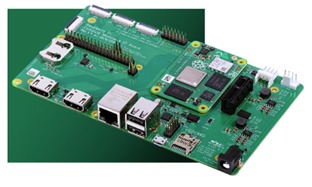
The GW7400-00 is a member of the Gateworks 7th generation Venice family of industrial single board computers targeted for small embedded applications such as IoT Gateways, Machine Learning, Unmanned Aerial Vehicles (UAV) equipment, digital signage, and robotics. This embedded single board computer features 6 Gigabit Ethernet ports, 3 Mini-PCIe slots and 1 M.2 slot.
Gateworks provides an Ubuntu Linux BSP for their Venice boards which includes the GSC (Gateworks System Controller) Firmware, Arm Trusted Firmware, DDR controller Firmware, U-Boot bootloader, the Linux 5.6 kernel, and a rootfs .
It’s also possible to use mainline Linux, and although some features such as the hantro-h11 jpeg video encoder are missing in mainline, Gateworks does usually have separate drivers for those. More technical details about the hardware and software, as well as a getting started guide can be found in the Gateworks Venice Family Support wiki.
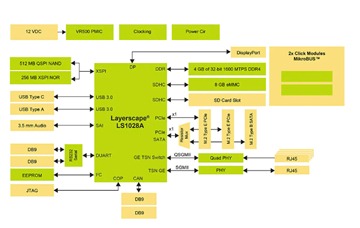
Figure 3: Venice GW7400 rugged & industrial single board computer
NXP layerscape LS1028A reference design board
The LS1028A reference design board (RDB) is an evaluation and development kit featuring the LS1028A industrial application processor and supports many of the features of the LS1028A SoC.
The RoHS-compliant LS1028ARDB is an ideal platform to start on for industrial gateway, HMI, and industrial control designs. The board can be used to begin software development and provides a reference for the final hardware design, helping to reduce time-to-market. The board comes in an enclosure, allowing easy deployment for demonstrations and test beds.
The LS1028A family is designed for industrial applications that require high reliability and long life in challenging environments, and includes industrial qualification, support for 125° C junction temperature and NXP's commitment to production for a minimum of 15 years.
The LS1028A processor is dual-core 64-bit Arm® Cortex®-A72. The LS1028ARDB can help reduce development time by providing :
- A reference for custom board development
- A debug tool to check behaviour on the board compared to custom board designs
- A pre-loaded embedded linux® software development Kit (SDK) for layerscape® processors
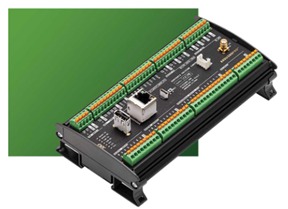
Figure 4: NXP layerscape LS1028A Reference Design Board Block Diagram
Arduino portenta machine control
Arduino Portenta machine control is a fully-centralised, low-power, industrial control unit able to drive equipment and machinery. It’s the IoT brain you can add to existing machinery or new projects to retrofit, upgrade or develop your ideas in entirely new directions.
With isolated digital I/O, 4-20mA compliant analogue I/O, 3 programmable temperature channels, and a dedicated I2C connector, the Arduino Machine Control offers industry standard soft-PLC control and can connect to a range of external sensors and actuators. There are a variety of network connectivity options, including USB, Ethernet, and WiFi/BLE, as well as industry-specific protocols like RS485. Resettable fuses protect every I/O, and on-board power management has been designed for optimal reliability in tough conditions.
Perfect for real-time data collection, Portenta Machine Control supports local and remote equipment control, even via the Cloud. It can connect to the network directly through Ethernet or use Wi-Fi and Bluetooth® Low Energy technologies to ensure low-cost, fast and stable data transmission, all while guaranteeing safe information exchanges thanks to its internal crypto chip. It is ideal for predictive maintenance and AI integration in the factory, and easy to program according to the Arduino framework or with standard PLC languages.
Together with many other hardware products, software tools, and Cloud services, Portenta Machine Control is part of the Arduino Pro ecosphere – and Arduino Pro unlocks the simplicity and success of open source for Industry 4.0, supporting activities from R&D prototyping to mass-production deployment.
The Arduino Pro itself is a microcontroller board based on the ATmega328, available in either 3.3V/8MHz or 5V/16MHz versions. There is also an Arduino Pro Micro, which is an Arduino Pro compatible microcontroller based on the ATmega32u4.
Arduino also offers their Arduino PLC IDE (Integrated Development Environment) which allows you to program the Portenta Machine Control as a PLC using the five programming languages defined by the IEC 61131-3 standard as above.
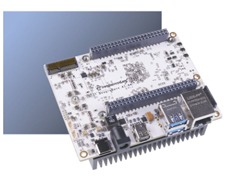
Figure 5: Arduino portenta industrial control unit
BeagleBone® AI-64 from Beagleboard.org®
To deliver the performance required for advanced AI and machine learning in a familiar, open platform that keeps things simple, BeagleBoard.org has launched the BeagleBone® AI-64 open hardware single-board computer (SBC). Continuing the tradition of open, accessible development platforms that pair with open-source software and locally hosted, ready-to-use toolchains, the BeagleBone® AI-64 features high performance under the hood to suit any AI – or other workload, for that matter – you need to run to set your design apart .
It’s powered by Texas Instruments’ 64-bit Jacinto TDA4VM processor featuring:
- Dual-core 64-bit Arm Cortex-A72 microprocessor subsystem that runs at 2GHz
- C7x floating-point, vector DSP that operates up to 1 GHz and deliver 80 GFLOPS
- 2x C66x floating-point VLIW DSPs as fast as 1.35 GHz that yield up to 40 GFLOPS
- PowerVR® Rogue 8XE GE8430 3D GPU that can net another 96 GLOPS at 750 MHz
- 8-bit Deep Learning Matrix Multiplier (MMA) with speeds of 1 GHz for another 8 TOPS
- Depth,/Decode, and Vision Accelerators with integrated ISPs
All these features have led to Jacinto TDA4VM deployments in ADAS and autonomous vehicle use cases, and that’s not even the SoC’s entire processing subsystem. The chip brings 2x programmable real-time units (PRUs) found in other BeagleBones back in the BeagleBone® AI-64, which facilitates low-latency control and deterministic communications with protocols like Ethernet TSN. It also integrates six Arm Cortex-R5F cores, two of which are located on the TDA4VM’s MCU Island and can be used in lockstep configuration for safety applications.
With all these cores at its disposal, the BeagleBone AI-64 adds up to a development platform that can handle intensive vision, AI, and machine learning workloads out of the box. That truly out-of-the-box experience begins with the zero-download Debian Linux distribution that ships on the board. Once the OS is booted, open-source 3D graphics drivers from Imagination Technologies provide access to the PowerVR GPU, while DSP programming tools packaged with the AI-64 run locally on the device.
Open-source AI tools like TensorFlow Lite, the ONNX neural network interface exchange, and Apache TVM machine learning compiler are supported by the platform as well, which allow the BeagleBone AI-64 to serve as a comprehensive, native development environment for intelligent applications. In other words, all you need is a power source, network connection, and simple web browser download to use the latest Beagle as a full AI development workstation.
SBC BeagleBone AI-64 product summary
BeagleBone® AI-64 features Texas Instruments TDA4VM system-on-chip with dual 64bit Arm® Cortex®-A72, C7xDSP and deep learning, vision and multimedia accelerators, 2.0GHz processor. It also has expansion headers compatible with many BeagleBone® cape add-on boards, M.2 E-key connector with PCIe, USB and SDIO for Wi-Fi/Bluetooth and expansion, 1x boot button, 1x reset Button, 1x power button, 1x power indication LED and 5x user LEDs.
- 4GB LPDDR4 RAM, 16GB on board eMMC flash storage
- 5V DC input power
- USB 3.0 Type-C interface for power input and data
- Dual USB super-speed (5Gbps) Type-A host ports
- Gigabit Ethernet, mini-display port, 16-pin microcontroller header
- Dual 4-Lane CSI camera connectors, 4-Lane DSI display connector
- Micro-SD slot, assembled heat-sink
- Wake-up domain serial port
- Main domain serial port, JTAG 10pin tag-connector for debug
- 0°C to 70°C working temperature and CE, FCC certification

Figure 6: BeagleBone® AI-64 from Beagleboard.org ®
NVIDIA® Jetson™ platform for autonomous machines and other embedded applications
NVIDIA Jetson brings the power of modern AI to millions of small, power-efficient devices and AI systems. It opens new worlds of embedded IoT applications, including entry-level Network Video Recorders (NVRs), home robots, and intelligent gateways with full analytics capabilities.
For example, the NVIDIA® Jetson AGX Orin™ module delivers up to 200 TOPS of AI performance with power configurable between 15W and 40W. This gives you up to 8X the performance of Jetson AGX Xavier in the same compact form factor. This system-on-modules support multiple concurrent AI application pipelines with an NVIDIA Ampere architecture GPU, next-generation deep learning and vision accelerators, high-speed I/O, and fast memory bandwidth. Now, you can develop solutions using your largest and most complex AI models to solve problems such as natural language understanding, 3D perception, and multi-sensor fusion .
PyTorch open-source machine learning library on Jetson Platform : PyTorch (for JetPack) is an optimised tensor library for deep learning, using GPUs and CPUs. Automatic differentiation is done with a tape-based system at both a functional and neural network layer level. This functionality brings a high level of flexibility, speed as a deep learning framework, and provides accelerated NumPy-like functionality. These NVIDIA-provided redistributables are Python pip wheel installers for
PyTorch, with GPU-acceleration and support for cuDNN. The packages are intended to be installed on top of the specified version of JetPack as in the provided documentation.
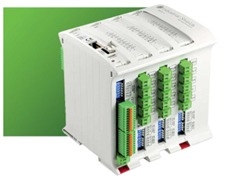
Figure 7: NVIDIA SoM Jetson AGX Orin, ARM Cortex-A78AE CPU, Ampere, 32GB RAM, 64GB eMMC
Programmable logic controllers (PLCs)
Industrial Shields Industrial Arduino PLCs
Arduino PLCs are based on the most popular open-source Arduino development boards, offering high-quality and high-performance industrial PLC solutions adaptable to various types of sensors, data, and communication choices. They employ a wide range of connectivity options to secure your data and operating system.
The Arduino PLC range supports up to 58 I/Os. It also contains several communication ports that provide more flexibility and control. The M-DUINO family allows expansion up to 127 modules through I2C, which means that you can connect up to 7100 Inputs / Outputs in Master-Slave connections, in additional to sensors.
The Arduino PLCs can be programmed using the Arduino IDE (Integrated Development Platform) open-source software . IDE includes a text editor for writing code, a message area, a text console, a toolbar with buttons for common functions, and a series of menus. The latest version of the IDE includes all libraries and also supports new Arduino boards. The software is available for Windows, MacOS, and Linux operating systems.
Programs written using Arduino software (IDE) are called Sketches.

Figure 8: Industrial shields arduino PLC
Kunbus revolution Pi DIN mounted PLC solutions
The Revolution Pi from Kunbus GmbH is an open, modular and inexpensive industrial PC, which complies with EN 61131-2 and IEC 61131-2 standards for PLCs, and is based on the well-known Raspberry Pi. Contained within a slim DIN-rail housing, the three available base modules can be seamlessly expanded by a variety of suitable I/O modules and fieldbus gateways. The 24V powered modules are linked via an overhead connector in seconds and can be easily configured via a graphical configuration tool .
The Revolution Pi uses the Raspberry Pi Compute Module as its core. Kunbus has added robust peripherals which meet all important industry standards. On the software side, the Revolution Pi has a specially adapted Raspberry Pi OS (formerly known as Raspbian) operating system, which is equipped with a real-time patch. The use of Raspberry Pi OS ensures that most of the applications developed for the Raspberry Pi can also be used on the Revolution Pi.
In addition to the most common Industrial Ethernet and Fieldbus protocol stacks, the Revolution Pi can seamlessly integrate sensors, actuators and controllers into an industrial network.
The Revolution Pi family includes the following modules:
- RevPi Connect+ :Powered by Raspberry Pi Compute Module 3+ (Available: 8Gb, 16GB, 32GB options)
- RevPi Core 3+ :Powered by Raspberry Pi Compute Module 3+ (Available: 8Gb, 16GB, 32GB options)
- Digital & Analogue IO Modules :Expand your Revolution Pi system by adding digital and analogue I/O expansion modules.
Figure 9: Base module RevPi Core 3 dismantled into its components. The Raspberry Pi Compute module is in the centre of the picture
Industry 5.0
As today’s small, inexpensive, yet powerful industrial computers continue to evolve, supported by advanced AI and IoT processing and communications, the new and emerging ideals of Industry 5.0 will become increasingly evident as the next stage of industrialisation. Industry 5.0 will see humans working alongside advanced technology and AI-powered robots, while industry priorities transform from production-based to value-based, focusing on social and environmental benefits as well as profitability .
Industry 5.0 aims to enhance workplace processes, increase efficiency, and improve resilience and sustainability.
References
- Timeline History of Automation - How Automation Was Evolving – Progressive Automations
- Programmable Logic Controllers (PLCs): Basics, Types & Applications | Electrical4U
- IEC 61131-3:2013 | IEC Webstore | water automation, water management, smart city
- Short history of manufacturing: from Industry 1.0 to Industry 4.0 - KFactory
- 1.1 OpenPLC Overview – Autonomy (autonomylogic.com)
- Facial-Recognition-EU-new.pdf (farnell.com)
- AES-ULTRA96-V2-I-G Avnet, Ultra96-V2 supporting Industrial-temperature range of -40°C to +85°C | Farnell UK
- Gateworks GW7400 networking SBC features 6 Gigabit Ethernet ports, M.2 & mini PCIe sockets for wireless connectivity - CNX Software (cnx-software.com)
- venice – Gateworks
- Layerscape LS1028A Reference Design Board | NXP Semiconductors
- Software - PLC IDE (arduino.cc)
- Embedded World Product Showcase: BeagleBone® AI-64 Open-Hardware SBC from BeagleBoard.org - Embedded Computing Design
- 900-13701-0040-000 Nvidia, SOM, NVIDIA Jetson AGX Orin, ARM Cortex-A78AE CPU | Farnell UK
- What is PyTorch? | Applications, Advantages & Diadvantages of PyTorch (educba.com)
- Installing PyTorch for Jetson Platform - NVIDIA Docs
- Arduino Integrated Development Environment (IDE) v1 | Arduino Documentation
- Meet the Revolution Pi products - Industrial Raspberry Pi
- What is Industry 5.0? (Top 5 Things You Need To Know) - TWI (twi-global.com)






Artificial Intelligence
One of the greatest revolutions in all of human history! AI is an all-encompassing concept that incorporates human intelligence into machines
DEVKIT HQ
The #1 Destination for Embedded Evaluation Boards, Development Kits, and Tools
Technical Resources
Explore our well-curated library of whitepapers, technical articles, videos, training modules, tutorials, and more to support you in developing your designs, business, and career
Technologies



Further Resources
Calculators & Conversion Charts
Selection Guides and Catalogues
Essential Learning Modules
Tech Spotlights
Design Resources
Engineering Glossary
Technical Support
Parts Finder Tools